June 14. Siem Reap
At last. Some interesting fruit. We have seen wonderful fruit in markets everywhere but all that we have been offered in restaurants and hotels has been water melon and pineapple. Dragon fruit were on the buffet this morning, alongside the usuals.
The minibus collected us at 8.30 and we drove straight to the temples. We started at the East side of Angkor Wat so that we would always have the sun at our backs. This was a slight benefit for the photography but light was a very complex issue.
It was very bright when out in the open but very dark when sheltered by the walls or the trees. Almost all images contained a mixture of both, something which most digital cameras can't handle.
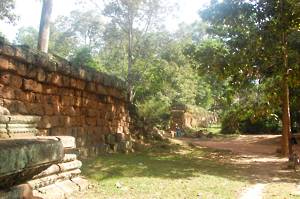
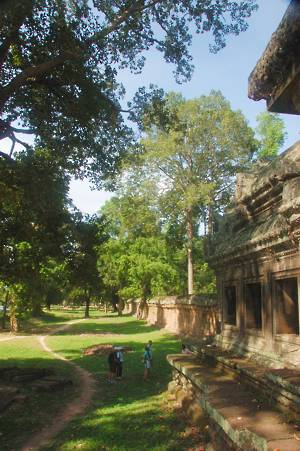
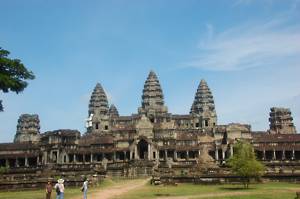
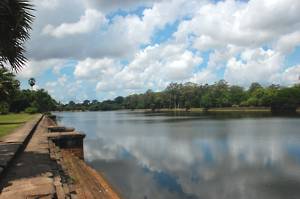
The temple is huge - the biggest religious building in the world. Going into detail would probably be a waste of time as the guide books can do it far better. The main reactions to it, however, are probably the best things to describe. Firstly, it is huge. It is surrounded by a moat about 1.5 by 1.3 kilometres, while the building, itself, is almost a kilometre square. This dwarfs European castles of the same vintage - mid 12th century.
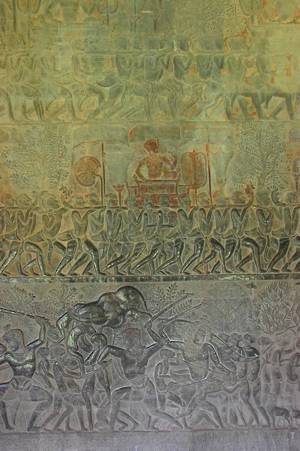
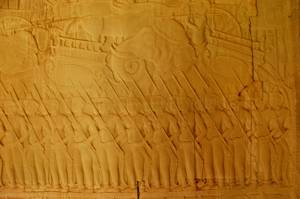
Whilst the country is now Buddhist, the temples here all have a Hindu heritage and thus include all manner of battle scenes, torture scenes & other non-peaceable activities featured on the low relief sculptures which surround the walls on the lower levels.
 |
 |
|
|
 |
|
|
|
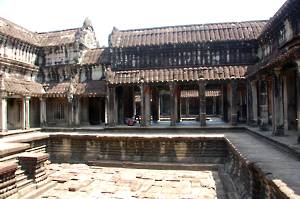
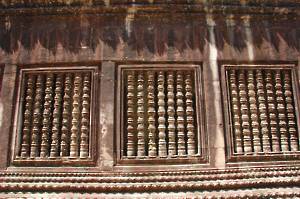
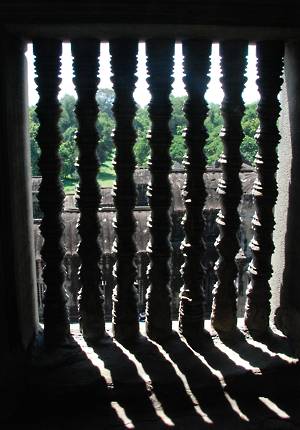
In the great heat - about 36 according to our guide - we examined the lower level carvings and then rose a short way to the first floor level, where there were huge pools, originally filled by the monsoon rains. The walls were heavily carved, the false windows with carved balustrades being particularly noticeable.
 |
 |
|
|
 |
|
|
|
|
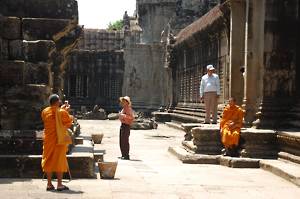
The temple was reasonably busy with visitors from all over the world. There were even a couple of Buddhist priests doing the tour and taking photos of each other with a small camera. There were a number of small shrines scattered around the site, where incense sticks could be bought for a small sum.
|
 |
|
|
Monks with cameras |
|
 |
|
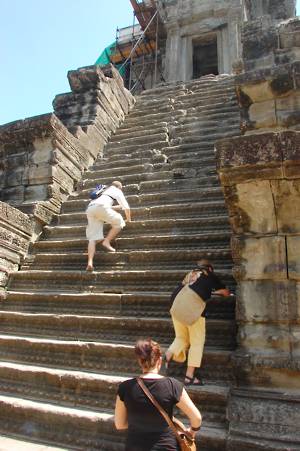
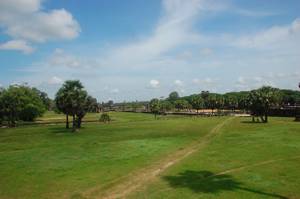
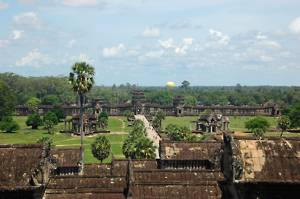
Lastly, we scaled some more terrifying steps to the top level, studied more walls, carvings and views and then faced the descent. This wasn't quite as bad as I had feared as a handrail had been added which, together with some modern steps infilling the original ones, made it seem almost safe - as long as I didn't look down!
 |
 |
|
|
 |
|
|
|
Once back at ground level, we exited the central temple building and walked along the sandstone causeway which runs to the main (West) gate. This is guarded by both lions and giant cobras, both sacred animals widely displayed throughout the temple complex. It seemed a very long way to the gate in the hot sun but we made it in the end.
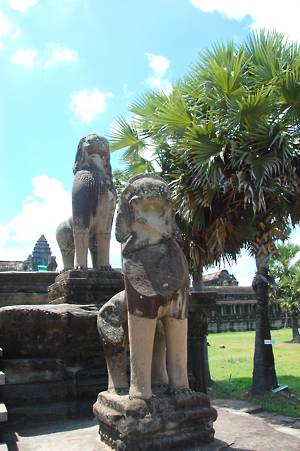 |
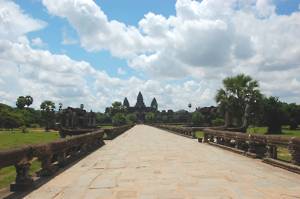 |
|
|
 |
|
|
|
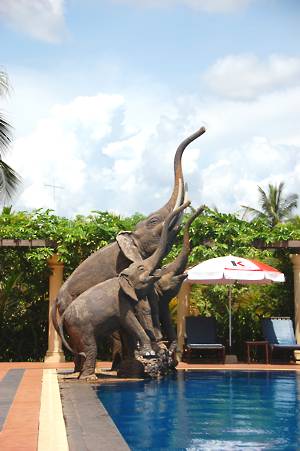 |
Left: Hotel swimming pool |
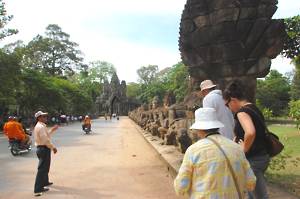
Angkor Thom, the great city, was the afternoon's destination. Like the temple before it, the scale was daunting. Covering an area of about 10 sq km, it housed about 400,00 people when it was in its heyday in the 12th century. The surrounding area supported about 1 million people. The population of London at the same time was probably about 150,000.
 |
 |
|
|
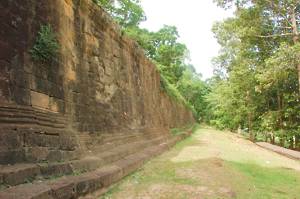 |
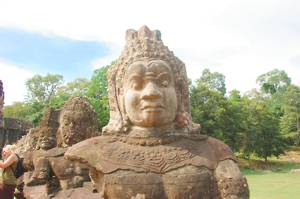
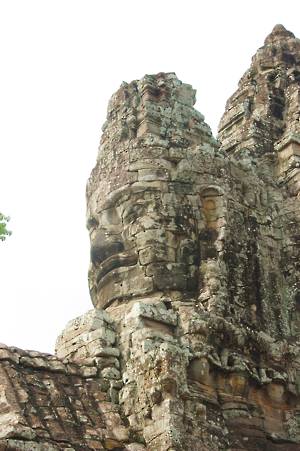
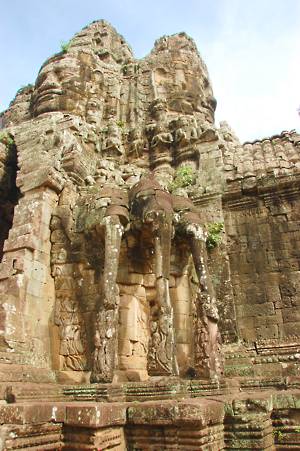
Leading to the city is a bridge across the moat, lined with huge carved heads, each about 6 feet high. This enters through a gate in the wall, which is about 8 metres high and about 12 kilometres in length. |
|
 |
 |
|
|
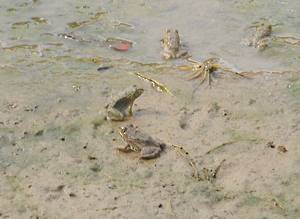 |
Immediately inside the gate is a large pond which was full of tiny frogs. These, apparently, will grow into rather large frogs in a few months time. |
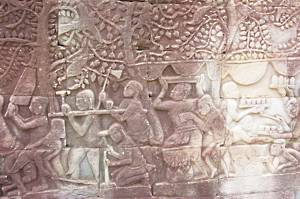
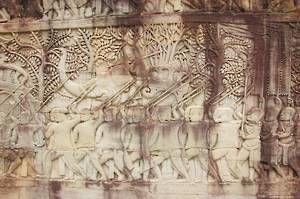
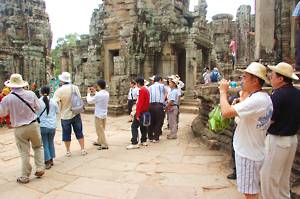
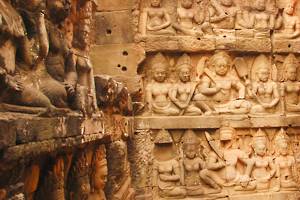
Once again, it was very hot. The carvings were magnificent, much higher relief than those at Angkor Wat. They showed scenes of battles but also of normal life. As before, much of the carving is in excellent condition but there are areas showing major signs of destruction.
 |
 |
 |
 |
|
|
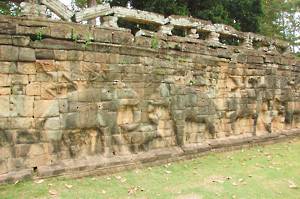 |
Some restoration work is under way in the temple area with both Japanese and Indian teams at work. The French had conducted restoration work when they were in control of the country but everything ceased and much damage was done during the revolutionary years in the '70s and '80s. We wandered around in the heat, eventually exiting the walls on the opposite side to the one at which we had entered. Left: Elephant terraces |
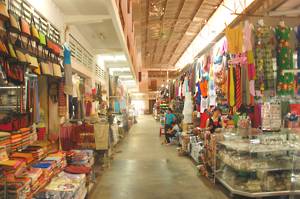
On the return journey to the hotel, we stopped off in the centre of Siem Reap to do a little shopping and window gazing. The main market wasn't very exciting, was obviously aimed at tourists and had prices much higher than in Thailand.
Someone in Thailand had expressed horror when we said we might do some shopping in Cambodia. We assumed that he was being patriotic but it would appear not.
 |
 |
|
|
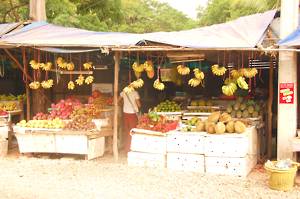
We did spot a good looking fruit stall and bought a small bag of longans, which we hadn't encountered before. These were small brown fruits, a bit like rambutans or lichees inside. We munched some of them in the minibus on the way back to the hotel.
|
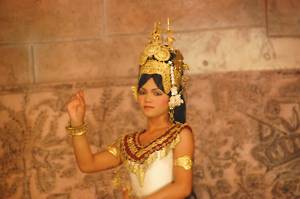
The evening started with wine - excellent West Australian sauvignon/semillon - and beer at the hotel bar. We shouted drinks for the guide and the driver, who then took us down the road to a large hotel restaurant. This was about the size of an aircraft hanger. The buffet dinner wasn't special but we then had an evening of local dancing. It wasn't too different from what we had seen in Thailand, with magnificent costumes and very stylised routines. |
 |