June 15. Siem Reap
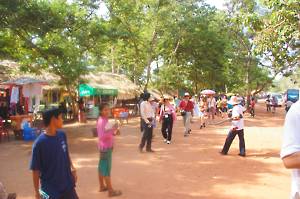
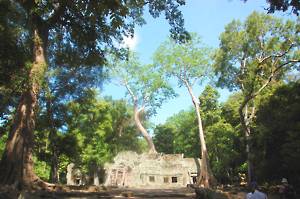
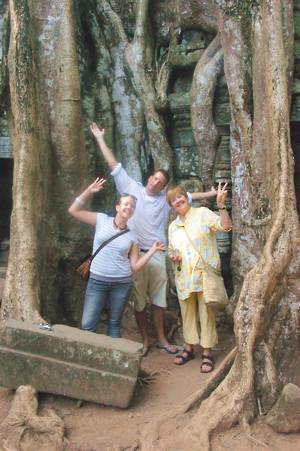
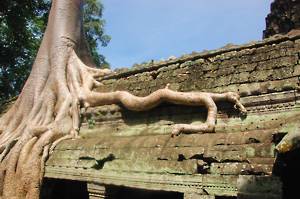
The usual routine of breakfast and then off to the temples. This time it was probably the most famous of them, Ta Prohm, the temple in the jungle. Started in the late 12th century, it has now been swallowed by the jungle and the sight of the tree roots seeking to overthrow the huge stone walls was used to great effect in the film Tomb Raider. Outside we found the usual mixture of stalls selling everything. I availed myself of a bottle of water.
 |
 |
|
|
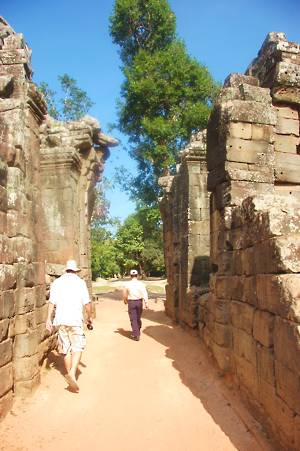
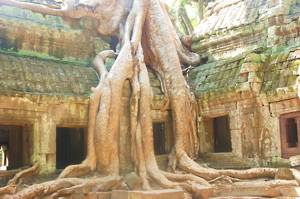
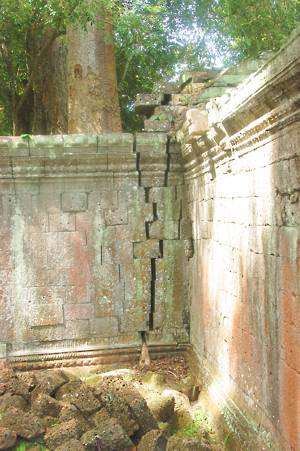
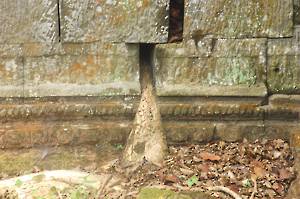
Many of the trees start their destructive work from the top down. Seeds fall onto the tops of the walls, start to grow there and then the roots work their way downwards until they reach the ground. Much damage has also been done in recent years by locals fleeing the Khmer Rouge and seeking valuable scrap metal to sell.
 |
 |
|
The trees are winning |
|
 |
|
|
|
 |
 |
|
|
 |
 |
|
|
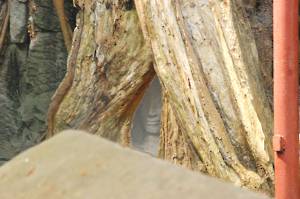
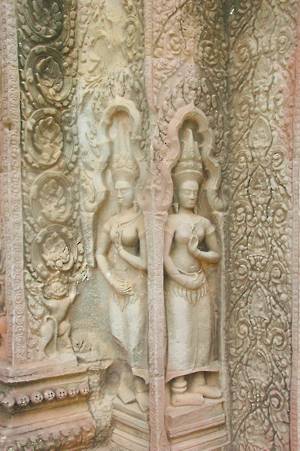 Some carvings still intact |
On the way out of the temple we bought ice cream, pineapple and mango from the usual assortment of stalls. From there, we were driven to the local artists training school. Artisans d'Angkor. This is seeking to revive some of the traditional Cambodian culture, which was dealt such savage blows by the Khmer Rouge. They were making spectacular reproductions of some of the low relief carvings seen in the temples, statues, wood carvings and silk paintings. These latter works were being made by a team of deaf mutes, who seemed happy enough in their demanding work. Photography was banned so I couldn't illustrate this remarkable craftsmanship. The shop was good and prices were reasonable so I bought an intricately worked metal cigarette box. |
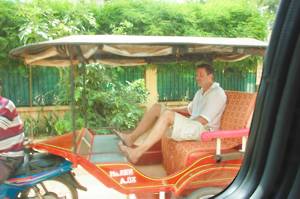 |
Lunch followed. A buffet again but much better than last night's. Three of us returned to the hotel in the usual van but Cory chose to take a tuk tuk.
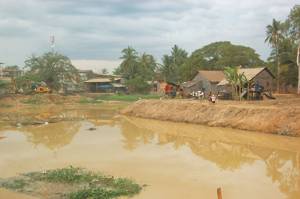
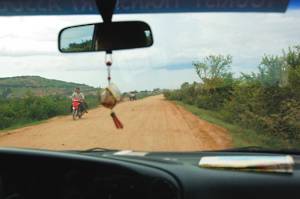
After a rest, the van collected us again and we set sail along increasingly suspect roads towards Ton Le Sap, the largest lake in the country which, in various guises, extends the 200 kilometres to Phnom Pen. The road followed the river out of the town, a mixed blessing because it floods every year in the rainy season. This damages the road so badly that no one can be bothered to repair it.
 |
 |
|
|
Ironically, the river is now being re-aligned in order to reduce the flooding. The end result is that the road deteriorates the further out of town it goes and starts to justify the Lonely Planet comment that Cambodia's roads rival those in Mozambique and the Congo as the worst in the world. As a result of the stupendous potholes, trying to take photos from the van windows proved almost impossible so that there were many fascinating sights which couldn't be illustrated.
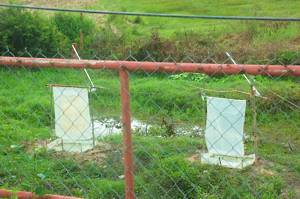
I did manage the cricket traps. The insects fly into the mesh and are then trapped and sold for the market. I did see similar insects on sale in Bangkok. Tasty eating, I imagine.
 |
 |
|
|
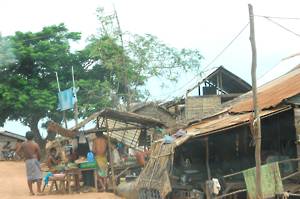
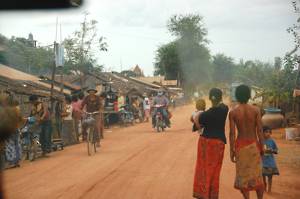
The housing changed markedly as we drove with some quite smart buildings in the town being replaced by thatched shacks. The people, however, looked healthy and well fed. Their dogs, incidentally, of which there were many, also looked well cared for.
 |
 |
|
|
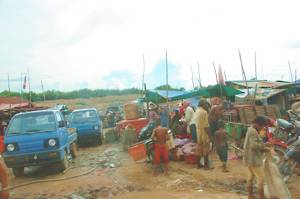
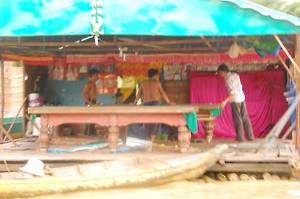
Heng, the guide, pointed out that many of these shacks contained TV sets and there were even pool tables in some of them. As ever, there were cafes every few yards and other stalls selling everything imaginable. The smart petrol stations in town appeared to have been replaced by stalls full of bottles containing a strange yellow liquid. We were told that this was petrol!
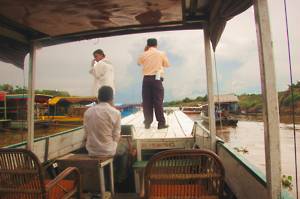
We ground to a halt in a muddy car park by the side of the river, where we climbed down the bank and into an antiquated motor boat. This took us along the very busy river, dodging lots of other tourist boats as well as those of the local residents.
 |
 |
|
|
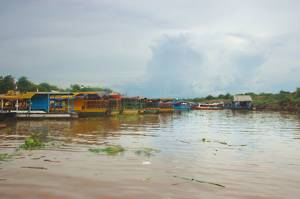
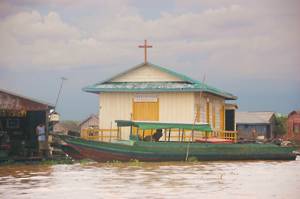
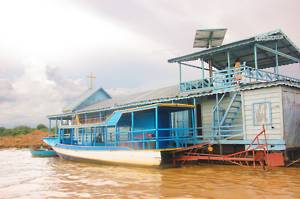
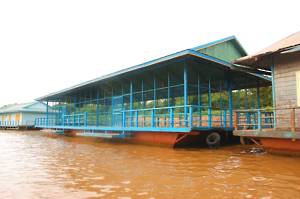
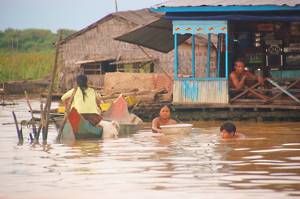
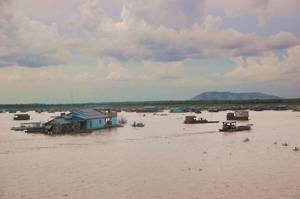
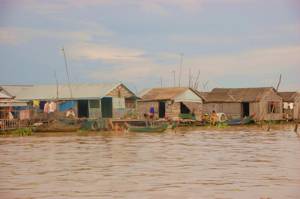
Driving habits on the river mirrored those on the roads! The roadside shacks became floating shacks. The poverty looked horrific but the people looked fit and there were large quantities of food in evidence. I was amazed to see two floating churches in such an overtly Buddhist country and, even stranger, a floating basketball court and a floating library. On the way back, we even spotted a floating pool table. (Photo shaken to pieces!)
 |
 |
|
|
 |
 |
|
|
 |
 |
|
|
Photography here was also limited as the boat bounced around almost as much as the minibus had. It should be noted that the river looked disgusting so I tried to keep my mouth firmly closed in order not to ingest too much spray.
 |
 |
|
|
 |
|
|
|
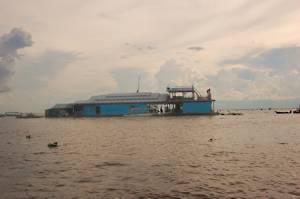
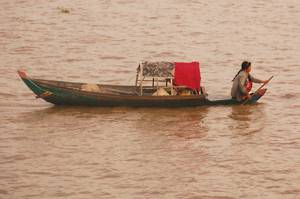
After about 20 minutes, we entered the lake, which was just as grubby as the river with floating vegetation everywhere. We passed floating houses, floating fish farms, floating dry docks and people of all shapes and sizes propelling themselves along the water in all manner of boats. The state of the water made me wonder why the locals weren’t all dead of cholera but I suppose they must be acclimatised to the bugs.
 |
 |
|
|
 |
 |
|
|
 |
 |
|
|
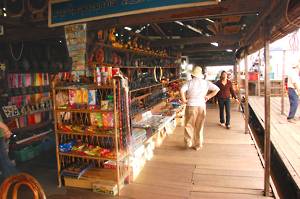 |
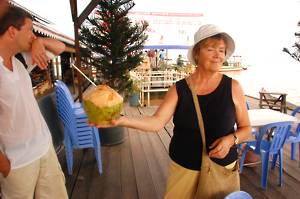
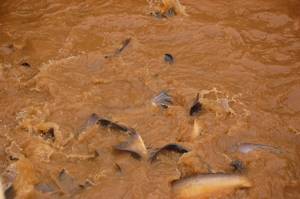
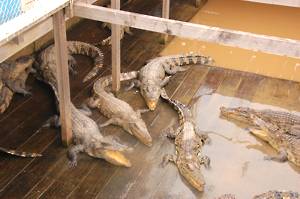
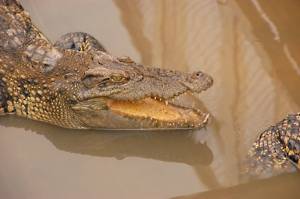
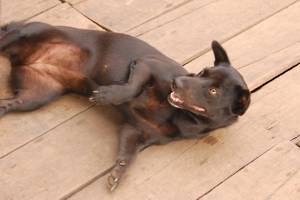
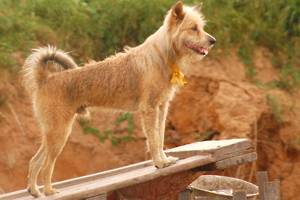
We tied up alongside a floating café and souvenir shop. This featured a tank full of catfish flapping around wildly and, slightly more alarmingly, a tank full of crocodiles. There was also a dog which greeted every boat with enthusiasm. A raised platform offered panoramic views of the lake, although water in every direction doesn't offer too interesting a view. |
|
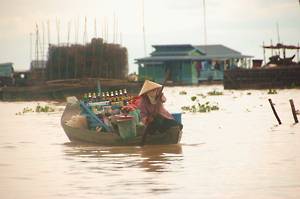
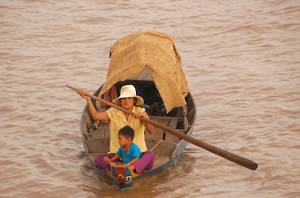
Small boats containing women and children mobbed the café trying to persuade the visitors to part with their cash in return for small bunches of bananas or similar produce. It was interesting to see in the back of one of these boats a very chubby looking baby, happily playing with a cuddly toy.
 |
 |
|
|
 |
 |
|
|
If only the "poor" people in New Zealand looked after their children as well as do the poor people in Cambodia. Over here, even the water dogs look well cared for.
The return journey mirrored the outward one. The sky was darkening and the heat was easing. By the time we had been back in the hotel for half an hour, thunder and lightning started and reasonably heavy rain fell. Dinner was in yet another hotel and was very disappointing. I am sure that, if left to our own devices, we could have eaten far better.