February 20
Dunedin to Alexandra
A lazy morning. Got up late after a mixed night’s sleep and lazed around the house with the rest of the family. Breakfasted on cherries bought in the market yesterday and some of the apricots which I had brought down from Central Otago, washed down with lots of coffee. I collected my goods & chattels, did several rounds of the house to check for forgotten items and departed over the hill to the North.
The first place of any size after Dunedin is Palmerston, most famous as the home of McGregors’ mutton pies. These are well known to all the citizens of Otago and it is customary to cut a hole in one corner in order to drain out the grease before eating them.
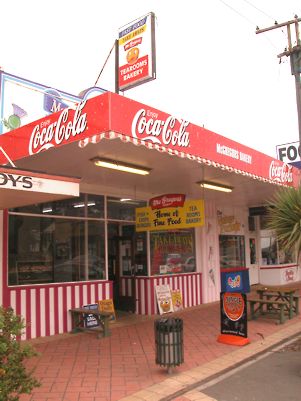
McGregor's Mutton Pie shop |
 |
|
|
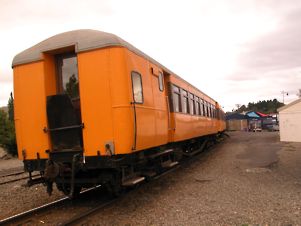 |
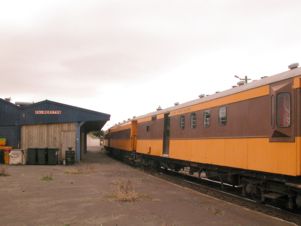
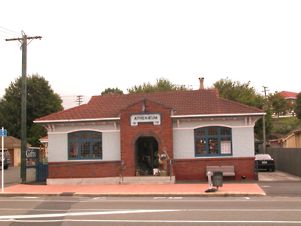
I was surprised to see the Taieri Gorge excursion train in the station as the Gorge is 75 kilometres to the South. It is possible that it was there to transport passengers from the cruise ship, which docked in Otago Harbour on Friday or Saturday, on some excursion but I forgot to ask so may never find out. Part of the station is now used as a café and I ignored the possibilities of the mutton pies to have a smoked salmon stack and a coffee from the Strictly Coffee Co in Dunedin. The former was OK and the latter, very good.
 |
 |
|
|
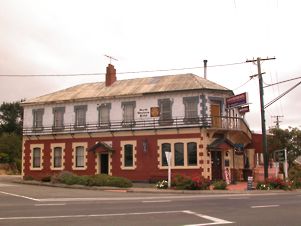
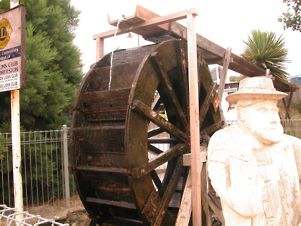
The town, itself, has a few old buildings but is nothing to write home about. The largest local industry is the gold mine, which started in 1990 and is operating at a profit.
 |
 |
|
|
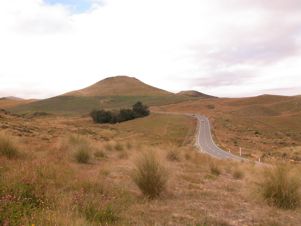
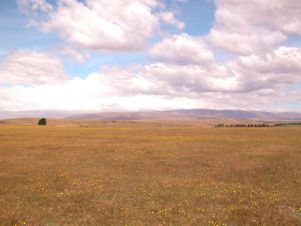
Running inland from Palmerston is the Pigroot, otherwise known as State Highway 85. It runs gradually up hill towards the Maniototo Plain and was the old coach road to the Otago goldfields until the railway line opened in the 1880’s.
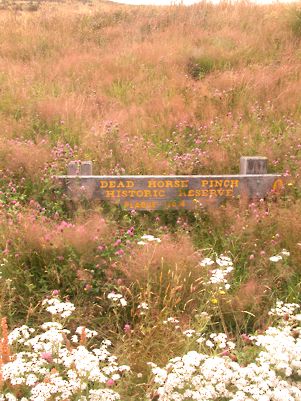
Above: Dead Horse Pinch
|
 |
|
|
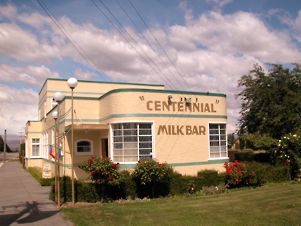 |
The main centre of the Maniototo is Ranfurly, which I photographed extensively on my last visit. Its big moment of glory comes next weekend, with the annual art deco festival. This provides an excuse for all manner of activities, many of which have only a passing relationship to the famed architectural style. There are a few excellent examples of the style in town but the whole concept is a triumph of marketing over reality.
After buying some Rail Trail postcards at the information office, I headed down the Ida Valley to reconnoitre my walking route. I didn’t bother with photos, feeling that they would be better taken on foot rather than from the car. The only difficulty was in locating the guest house where I plan to stay in Omakau but this transpired to be about 500 metres out of the village. It looked very smart so I hope it provides a comfortable bed as I am going to need one after walking 27k.
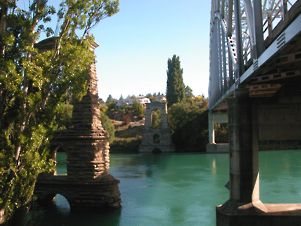
Alexandra is a regional administrative and commercial centre. It even has a first class cricket ground. It has an old bridge and a new bridge and has required major flood prevention works several times in recent years. It is regularly the hottest town in the countr, 42 degrees about 10 days ago, and Ophir, the village next to Omakau, has recorded the lowest temperature in the country. Other than that, it is an unremarkable place. After a brief wander around town and a reorganisation of my clothes so that they would fit into my backpack, I walked a hundred metres down the road to a Portuguese restaurant, had a huge plate of bread and dips followed by the fish stew for which the place is famous. |
 |
|
It was very large and I washed it down with a couple of glasses of the local white wine. After that, bed called.
| Next Day |