Dec 25
Olesnica
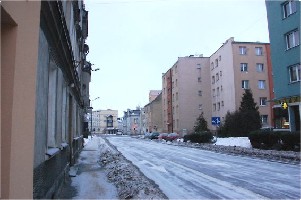
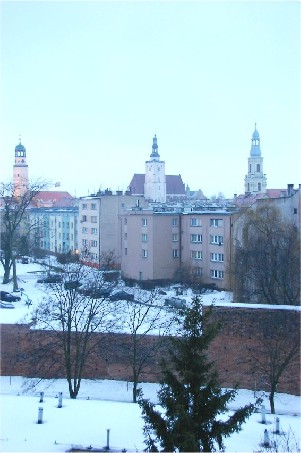
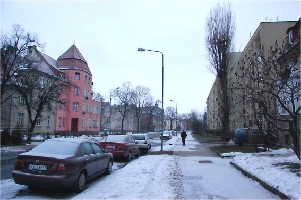
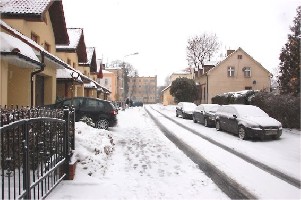
A small amount of sleep. I wish I could get my system back to normal. Outside it was crisp and clear. The fog which had obliterated the view yesterday had vanished, leaving a vista of four magnificent spires. Like Oxford only less dreamy. The walk to the house was rather pleasant. Even though it was Christmas morning, someone had sanded some of the pavements so that walking wasn't too hazardous. The temperature wasn't too low and there was a light powdering of fresh snow. There were a few people on the move, mainly heading to church, but the roads were quiet.
 |
 |
Quiet streets ... |
|
 |
|
|
|
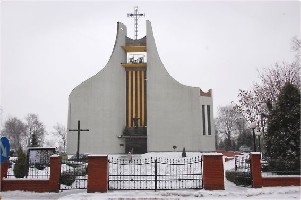
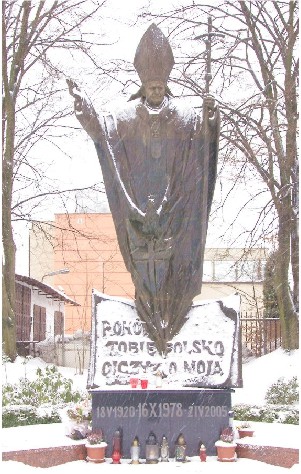
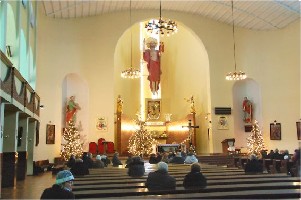
From the house we drove to the family's church, not too far away. It is a huge, modern, concrete edifice. Outside was a large statue of Pope John Paul and inside were lots of icons and statues.
 |
 |
|
|
 |
|
|
|
The church appeared to be full and I would estimate that there were about 400 in the congregation. With the service being in Polish, I understood none of it but was a little disappointed by the music. Coming from the Anglican/Methodist tradition, I am used to lots of joyous singing at Christmas. There was little of this, with the atmosphere being much more sombre.Right: Nativity scene |
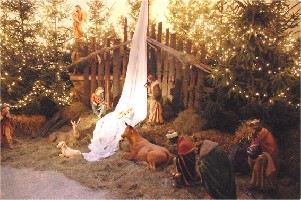 |
As we were leaving, we were taken to see the huge nativity scene in one corner. It was beautiful. Not having taken my camera, I determined to return later to record it all.
Back at the house, everyone grabbed the computers and started to contact their nearest and dearest across the world on Skype, leaving me in splendid isolation.
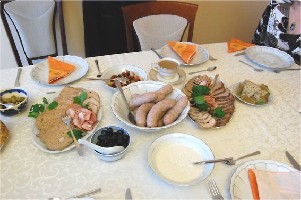
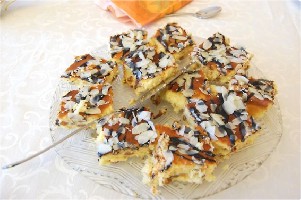
Brunch was meat, meat and more meat, interspersed with some fish left over from last night. There were a few olives to provide some token vegetable content. A home made baked cheesecake, more ginger cake and chocolate followed. Lots of coffee and tea but still no alcohol.
 |
 |
|
|
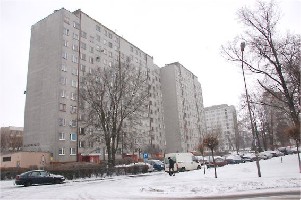
Seeking for further amusement, we drove back to the church for a photo session. As usual, I was hesitant about taking photographs inside but as many of the locals were happily snapping - and flashing - away, I did the same but without the flashing. Just outside we passed the huge block in which the family lived until a few years ago, when their current house was built. |
 |
|
|
 |
 |
|
|
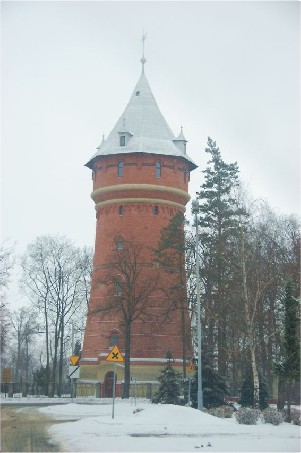
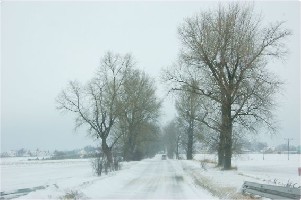
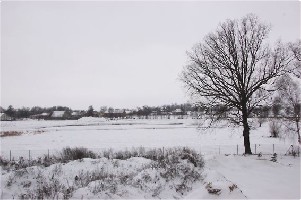
We then drove out of town to the village of Boguszyce, a distance of about 10 k, where Robert and Eva are building a house on the edge of the forest.
 |
 |
|
|
 |
|
|
|
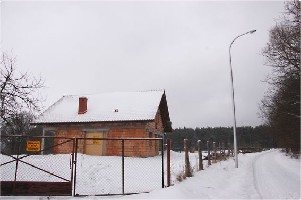
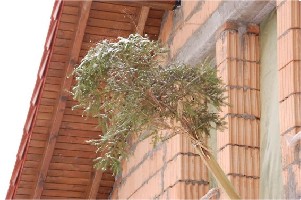
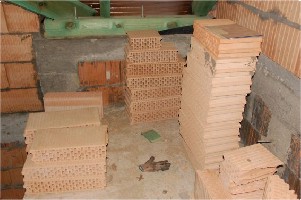
It is huge by UK standards & not far short of what most people in New Zealand have. The shell had been completed but the walls were bare. It is constructed of terracotta blocks, which will have an external cladding of foam blocks before being plastered externally.Fixed to the outside was a branch. This is a signal from one set of subcontractors that they had finished their work & would like to be paid. It is also a symbol of good luck. |
 |
|
|
 |
 |
|
|
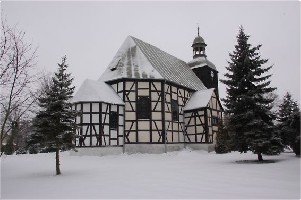
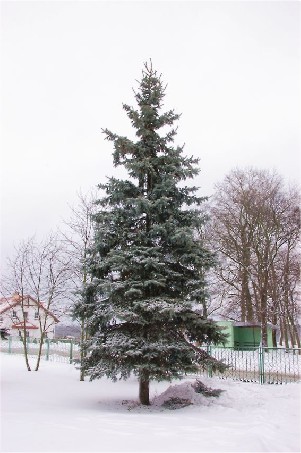
On the way back, we stopped outside the magnificent church to take photos both of it and of the snow covered trees in the churchyard. A perfect Christmas Card scene.
 |
 |
|
|
 |
|
|
|
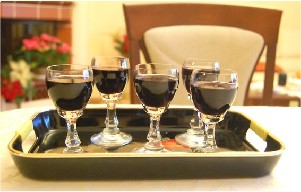
Back at the house, Richard produced a bottle of his home made plum vodka. This was stunning, quite unlike the coarser, commercial, varieties that I have tried. It was more like a sloe gin or a port than a vodka.
After a rest, much needed as I was still not sleeping properly, some maps of Poland appeared & we sat down to discuss Polish history. Richard & I were the main protagonists, with Robert and Eva as the main translators. The service that they and Aga provided was invaluable & ensured that I learned a lot about the country and its people. The main problem that I had was remembering to look at the person who was speaking to me and to whom I was speaking, rather than at the translator. This was a major issue of social etiquette although, I am sure, no one would have taken offence.
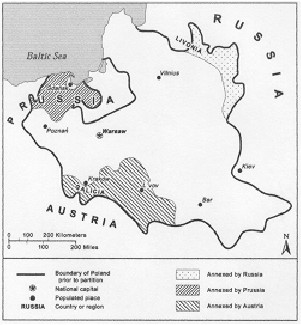
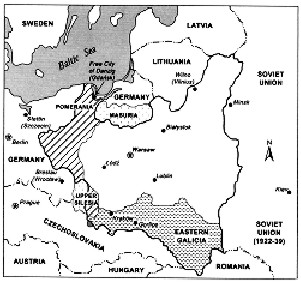
I have managed to obtain some maps which show the scale of the changes which have occurred to the country during the last 250 years.
 |
 |
|
|
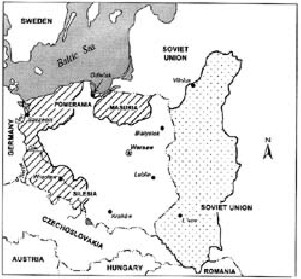 |
Richard had maps dated in the 1780's, the 1930's and 1992. In the 1780's, Poland was the largest country in Europe, stretching well into modern Russia, although Silesia, where Wroclaw now is, was still a German state. After WWI, Poland lost a huge area in the East but gained access to the Baltic through the Danzig (Gdansk) corridor. Silesia remained in Germany. The area where Richard's family came from was still in Poland. After WWII, Poland moved a long way to the West. Silesia was taken from Germany, with Breslau becoming Wroclaw. Robert's family's old area and a huge swathe of the east of the country was subsumed within the USSR. The sheer scale of these changes and the human costs involved is difficult to imagine, particularly when you live in two island nations. |
|
Richard believed that the current boundaries were probably the most sustainable that they had ever been. His main concerns now were the proximity of both Berlin and Russia.
We went on to discuss the impact of the EU, which he believed to be good as Poland had benefited from large grants, particularly for roading, as a means of improving transport links between the EU and Russia.
Dinner was turkey with, at last, a bowl of very delicate shredded cabbage or lettuce, mixed with some other vegetables. There were also some pickles. This was accompanied by a bottle of wine from Moldova. It was possibly cabernet based, although much of the wine produced there is from a large number of local varieties of which I have never heard. It was light with a pleasant nose and front of palate. It lacked, however, any great length or depth of flavour. There was also some solid South African pinotage.
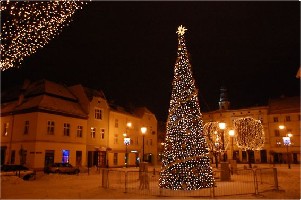
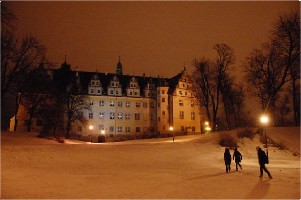
After dinner, some of us walked into town to view the castle, more like a French chateau than an English defensive construction. It looks grand but is now a cheap hotel and a home for problem children. There were quite a few people wandering around, some of them exercising their dogs in the snow.
 |
 |
|
|
More coffee and cake followed when we returned to the house, after which I walked back to the hotel and to my bed.